Estes D12-5 Model Rocket Engines
Estes D12-5 Rocket Engines
Estes D12-5 Rocket Engines with Plugs and Ignitors
Estes D12-5 Engines for Hobby Rockets
Estes D12-5 24mm Rocket Engines
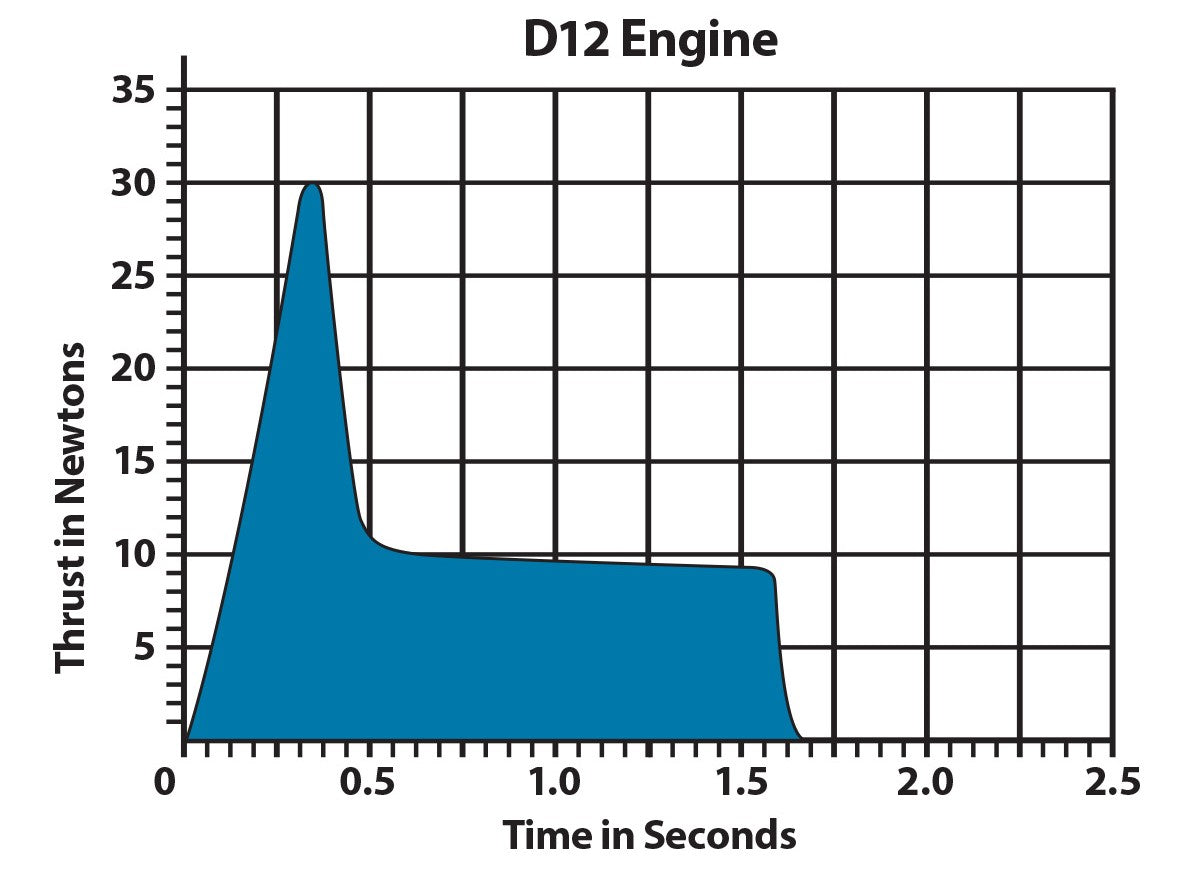
D12 Model Rocket Engine Thrust Curve Chart
Model Rocket Thrust Curve Example
24mm Rocket Engine Assembly How-to Video

D12-5 Engines

SKU: 010028
$14.99
Sale Sold Out

The Estes D12-5 engine is a reliable, high-thrust option ideal for classroom rocketry projects and STEM programs. Its 5-second delay helps demonstrate key flight principles like coast time and recovery deployment in real-world launches.

Each pack includes two engines, two starters, and four plugs—everything educators need for successful, hands-on learning experiences in science and engineering.

Includes:
- 2 D12-5 Engines
- 2 Starters
- 4 Starter Plugs

PLEASE NOTE: You must have a physical address for delivery.

Overview

The Estes D12-5 engine is an excellent choice for educators guiding students through hands-on STEM activities in rocketry. With its high-thrust performance and 5-second delay, this engine allows rockets to continue coasting after burnout before the recovery system is deployed—an ideal feature for teaching flight dynamics, delay timing, and recovery principles in real-world applications.

Designed for rockets that require D-engine power, the D12-5 supports a range of heavier or more complex models often used in classroom builds or advanced rocketry units. It’s especially useful for demonstrating the relationship between thrust, mass, and flight trajectory. The longer delay gives students a clear example of how coast time impacts altitude and when recovery systems should be triggered for optimal performance.

Each pack includes two D12-5 engines, two starters, and four starter plugs, providing everything needed to prepare for launch day. The components are easy to use, making this engine a practical option for educators leading group activities or managing multiple student projects. Estes’ consistent engine quality ensures a dependable launch experience, reducing downtime and helping students focus on learning.

Whether used in a science class, STEM camp, or extracurricular program, the D12-5 engine supports engaging, standards-aligned lessons in physics, engineering, and aerodynamics. It’s a dependable tool for inspiring curiosity and delivering hands-on experience in rocketry that students will never forget.

ATTENTION: Estes Industries, LLC requires all purchasers and users of Estes® Model Rocket Engines to adhere strictly to all applicable local, state, and federal laws, regulations, and safety standards. The user assumes all responsibility for the safe and lawful use of Estes® products. Estes Industries, LLC expressly disclaims any and all liability for personal injury, property damage, or other loss resulting from the misuse, improper handling, or unauthorized application of its model rocket engines.

Overview

Estes D12-5 Rocket Engines with Plugs and Ignitors

Compatible Rockets

Technical Specifications

Technical Specifications

  • Total Impulse

20.00 N-Sec
  • Time Delay

5 Seconds
  • Max Lift Weight

10.0 oz (283 g)
  • Max Thrust

32.90 Newtons (7.4 lbs)
  • Thrust Duration

1.60 Seconds
  • Length

2.75 in. (7 cm)
  • Diameter

24 mm
  • Weight

1.61 oz. (45.6 g)
  • Propellant Weight

0.85 oz (24.2 g)
D12 Model Rocket Engine Thrust Curve Chart

Customer Reviews

Based on 21 reviews
90%
(19)
10%
(2)
0%
(0)
0%
(0)
0%
(0)
J
James Haggerty (Rancho Mirage, CA)
C
Carlos Esqueda (Salt Lake City, UT)
R
Rylinn C (Manor, TX)
Engines All Flew Flawlessly!

Today I fired a total of 4*, D12-5 ESTES rocket engines with a bunch of friends. The first flight was on the commercial ESTES model rocket called 'Mean Machine' and the rocket fired first try. The burn duration was about 2 to 2.5 seconds and the ejection charge fired at the specified time as well, and the parachute deployed nominally. The next flight was for a rocket that I designed and the engine took a few tries to ignite but that was only because I crossed the wires of the e-match. Otherwise, the engine preformed well, the burn time and charge delay both performed nominally like before, but
--> the charge was powerfill enough to tear off the braided nylon mason line from it's anchor and subsequently soften the 3d printed PLA of the fuselage, causing the anchor to self-dissasemble and the nose cone, being very light, to drift with the parachute many hectometers away into the treetops, while the lower stage fell ballistically for us to examine. <--
The third launch was to re-launch the ESTES kit model we recovered and it went perfectly despite the parachute becoming a streamer after it got tangled in a tree on the flight before.
NOTE: the winds were between 3 and 8 mph on the first launch and increased to between 10 and 20mph on the subsequent three launches. Addiitionally, i was using a 6ft by 5mm (3/16'') launch rod I picked up from a hardware store and shoved it in the dirt with the standard exhaust shield that comes with the launch pad set and this worked better than anything else for holding the tall rocket vertical for extended periods of time ready on the pad before launch.
*The fourth launch was us being stupid and tying the engine to the side of some of the debris from the second rocket and sending it so it's not actually useful to include details.

Estes-LP2-06

Live, Online Training and 1:1 Support

Estes Education has been a leader in STEM education for over 60 years. We know that STEM is a vital interdisciplinary topic that requires hands-on and inclusive learning. Explore these supporting materials to take learning to new heights!

Should you have need, you can meet with a member of Education team for FREE, 1:1 online support to learn rocketry basics, how to apply our curriculum, and discover unique teaching strategies. Our team is eager to answer your questions!

Learn About Model Rocket Safety!

Not sure how to safely launch a rocket with your group? Head over to our dedicated Safety instructions page for videos, support, and more!
AboutUs_HeaderImage_2