
- Pencil
- Ruler
- Scissors
- Hobby knife
- Hammer
- Yellow glue
- Epoxy
- CA glue
- Fine sandpaper
- Sanding block
- Masking tape
- White primer
- Paint
- Clear coat (optional)
In The Classroom

Turn Your Next Launch Into an Investigation
What changes when the same rocket flies with a different engine configuration? The Pro Series II™ Terra Nova™ gives experienced educators and advanced rocketry groups a compelling way to explore that question. Its quick-change engine mounts, a first for Estes, support both single-engine and quad-cluster flights. Named after the ship that carried Captain Robert Falcon Scott’s British Antarctic Expedition, Terra Nova brings a spirit of exploration to a project your group can build, launch, and study together.
One Rocket, Multiple Ways to Explore Propulsion
Both engine mounts are included, allowing your group to build a single 29 mm setup for the F15-4 and a four-engine 24 mm setup for the recommended C11 and D12 combinations. The mounts swap quickly and easily between flights, making it practical to compare configurations without constructing another rocket. Use the options below to guide predictions and discuss total impulse, liftoff mass, and ejection delay. Recording the configuration and conditions for each flight gives your group a useful foundation for interpreting the results.
| Engine Mount | Recommended Engines |
|---|---|
| Single Engine 29 mm mount | 1 × F15-4 |
| Quad-Cluster Four 24 mm engines | 2 × D12-5 + 2 × D12-7 |
| Quad-Cluster Four 24 mm engines | 2 × C11-7 + 2 × D12-5 |
| Quad-Cluster Four 24 mm engines | 2 × C11-5 + 2 × C11-7 |
Quad-cluster flights require the Pro Series II™ Launch Controller (2240) and a 3-cell 11.1 V LiPo Battery (2217), sold separately. Install matching engines opposite one another for symmetric thrust, and follow the included instructions for engine placement and cluster wiring. Projected maximum altitude is 975 ft. (297 m); flight altitude varies by configuration and conditions.
Bring Flight Data Into the Discussion
The dedicated avionics bay supports optional altimeters and flight data accessories, giving your group a way to bring measurements back from the launch field. Add the Estes® Altimeter, sold separately, to record peak altitude and compare it with your predictions. Build a flight log, graph results across launches, and discuss how engine choice, added equipment, and weather may contribute to differences. Follow the included instructions for securing instrumentation and adding the vent holes required for altimeter use.
A Collaborative Build With Real Engineering Decisions
At 51.25 inches tall and 3 inches in diameter, Terra Nova gives your group a substantial model to work on and a finished rocket worth gathering around. Laser-cut plywood fins, two engine mount assemblies, and an avionics bay make this Expert level kit a rewarding project for participants with established building skills. Divide responsibilities across assembly, documentation, and inspection while an experienced leader oversees the build. The 36-inch parachute recovery system adds another opportunity to connect careful preparation with flight performance.
Plan a Launch Your Group Can Learn From
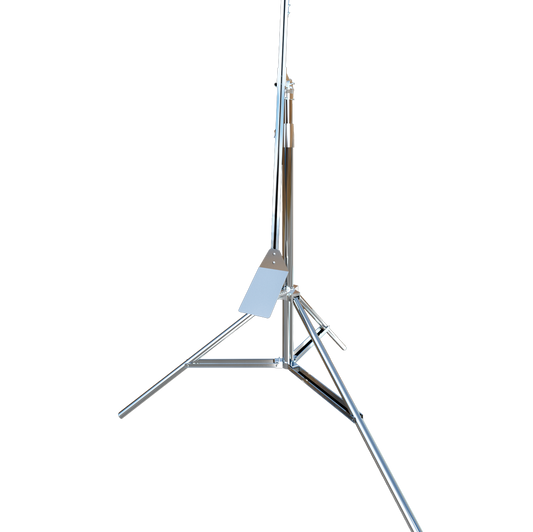
Make launch day part of a longer investigation by assigning roles for flight preparation, observation, and recording results. Terra Nova includes components for both engine mounts, decals, and a parachute recovery system, and launches from a Pro Series II™ Launch Pad with a 1/4-inch rod or a Pro Series II™ Launch Rail. Complete your program’s setup with the recommended engines, launch equipment, recovery wadding, and construction and finishing supplies, available separately. After recovery, bring the group together to compare observations, review the data, and plan what to investigate on the next flight.
What You Need To Build (Not Included)
What You Need To Launch (Not Included)
What You Need to Fly
-
 Sold Out
-
Pro Series II™ Launch Pad
Regular price $59.99Sale price $59.99Unit price per -
Pro Series II™ Launch Controller
Regular price $43.99Sale price $43.99Unit price per -
Pro Series II™ Li-Po Power Battery & Charger
Regular price $34.99Sale price $34.99Unit price perSold Out -
Pro Series II™ Recovery Wadding
Regular price $10.99Sale price $10.99Unit price per -
C11-5 Engines
Regular price $14.99Sale price $14.99Unit price per -
C11-7 Engines
Regular price $14.99Sale price $14.99Unit price per -
D12-5 Engines
Regular price $15.99Sale price $15.99Unit price per -
D12-7 Engines
Regular price $15.99Sale price $15.99Unit price per -
F15-4 Engines (29 mm)
Regular price $33.99Sale price $33.99Unit price per


Live, Online Training and 1:1 Support
Estes Education has been a leader in STEM education for over 60 years. We know that STEM is a vital interdisciplinary topic that requires hands-on and inclusive learning. Explore these supporting materials to take learning to new heights!
Should you have need, you can meet with a member of Education team for FREE, 1:1 online support to learn rocketry basics, how to apply our curriculum, and discover unique teaching strategies. Our team is eager to answer your questions!
